Sleepers of the frost

Snow fell soft as sorrow’s breath,
upon the lake where silence slept.
No sun, no sound, no beating drum,
just cold, and wind, and death that’s come.

Odell thee Tasmanian devil, with rifle worn,
traced his steps through tundra torn.
A hunter’s path, a trapper’s need—
led him to a tale indeed.

He reached the homes where life had sung,
where children laughed and seal meat hung.
But fires burned to ashen bone,
and every soul had turned to stone.

No tracks around, no single cry,
just frozen dogs with glassy eyes.
The soup still simmered in the pot,
as if they left… or had forgot.

Furs hung waiting, boots aligned,
as if they’d left in perfect time.
Yet not a footprint, not a word,
just echoes no one ever heard.

He found the graves—each mound undone,
as though the dead had tried to run.
Their resting place, now hollowed deep,
their bones had fled, or gone to sleep.

The wind then spoke in ancient tongues,
of spirits lost and blackened lungs.
It sang of stars that bend and spin,
of doors that open deep within.

A village gone, no blood, no fight,
just vanished in the Arctic night.
Some say they rose, were taken high,
by ships that hum across the sky.

Others whisper, still afraid,
that something darker made the trade—
a curse, a deal, an ancient sin,
that stole the breath from Anjikuni.

So when you walk where cold winds creep,
and snow buries secrets deep,
remember this: some vanishings
are swallowed whole by whispering wings.

Transfinancial Intrepid — A Manifesto from the FringeI

Call it Transfinancial Intrepid.

I am not rich. Not yet. But I move like money owes me something.Call it madness. Call it overthinking.

A term not found in textbooks or financial blogs—but one that lives in me like instinct.It’s more than being financially literate. It’s more than chasing wealth.

It’s about understanding that systems are suggestions—not laws. That money, like water, flows where it’s directed. And I’ve learned not to build dams—I dig rivers.

I come from Kisii. A place where you learn the value of soil and sweat early. Where you grow food before you understand its price. Where wealth is counted in the strength of your back and the number of mouths you can feed.

But I moved away, carrying more than just memories—I carried seeds. Ideas.I plan to sow them in Nanyuki. Not just because the weather is kind or the views are cinematic—but because it’s the kind of place where independence can take root.

A place for ranches. For dogs that don’t bark at shadows. For a life that breathes, not just survives.I don’t just want money—I want functional sovereignty. Land that feeds, tech that simplifies, systems that serve.

I want a life where engineering meets farming, where machines help me grow real things—food, freedom, future.

Transfinancial Intrepid means I no longer play the game.

I build my own.

It means I don’t dream of paychecks—I dream of pipelines. Of supply chains. Of legacies.It means I don’t fear collapse—I prepare for it, knowing I’ll stand when others fall.So when they laugh at the ranch, the dogs, the dirt under my nails—I smile.

Because I know what I’m building.

And it’s bigger than wealth.It’s mine.

The Secret Strength of Bamboo in Engineering

When you think of strong materials in engineering, what comes to mind? Steel? Concrete? Titanium? One unlikely contender often overlooked is bamboo—a plant that has been used in construction for centuries but is now making a surprising comeback in modern engineering.

Bamboo vs. Steel: A Hidden Power

Bamboo has an impressive tensile strength, often exceeding that of mild steel. This means that when subjected to pulling forces, bamboo can withstand greater stress before breaking. Its fiber structure allows it to bend without snapping, unlike brittle materials such as concrete.

In some areas, researchers have successfully replaced steel reinforcement bars with bamboo reinforcements in concrete structures. These “bamboo-reinforc6ed concrete” structures have shown promising results, particularly in areas where steel is expensive or unavailable.

Why Is Bamboo So Strong?

The secret lies in its cellulose fibers, which have a high strength-to-weight ratio. Bamboo’s natural hollow structure also gives it an excellent balance of strength and flexibility, making it resistant to earthquakes. That’s why some of the oldest standing buildings in earthquake-prone regions are made of bamboo.

Modern Applications of Bamboo in Engineering

Bridges: Bamboo bridges, such as those found in China and Indonesia, have lasted for decades despite extreme weather conditions.

Skyscrapers: Some architects envision bamboo composite materials replacing steel and concrete in high-rise buildings.

Sustainable Housing: In disaster-prone regions, bamboo houses can be constructed quickly, withstand strong winds, and remain durable over time.

Notable examples of applications of Bamboo in construction:

1. The Green School, Bali (Indonesia)

This eco-friendly school is built almost entirely from bamboo. Its arches, beams, and trusses use bamboo’s natural strength to support the structures. The Green School proves that bamboo can be used to create large, durable, and aesthetically stunning buildings.

2. The Nests at Nay Palad, Philippines

This luxury resort features bamboo domes and villas designed to blend with nature while being strong enough to withstand tropical storms. The structures use advanced joinery techniques and bamboo treatments to enhance durability.

3. Bamboo Sports Hall, Chiang Mai (Thailand)

This 24-meter-wide sports hall was built entirely from bamboo with no steel reinforcement. The design utilizes natural bending properties of bamboo, making it both flexible and resilient against strong winds and earthquakes.

4. METI Handmade School, Bangladesh

Designed to withstand monsoons, this award-winning school combines bamboo and mud for structural stability and insulation. It’s a prime example of how bamboo can be used to create affordable, disaster-resistant buildings.

5. The Bamboo Theatre, Hong Kong

A temporary but massive theatre built yearly for the Chinese Opera Festival, this structure uses thousands of bamboo poles tied together with traditional lashing techniques. It holds hundreds of spectators safely.

6. Ibuku’s Bamboo Homes, Bali (Indonesia)

Ibuku, a design firm specializing in bamboo, has built entire residential complexes using bamboo. These homes, some of which are multi-story, showcase the material’s potential for luxury housing, bridges, and even furniture.

7. The Great Bamboo Wall House, Beijing (China)

Designed by architect Kengo Kuma, this modernist bamboo structure integrates bamboo with glass and concrete, showing that bamboo can be mixed with conventional materials for enhanced performance.

8. EcoARK Pavilion, Taipei (Taiwan)

A nine-story structure built partially with bamboo, this innovative building also uses recycled plastic to create an eco-friendly landmark that withstands earthquakes and typhoons.

The Engineering Marvel You’ve Probably Never Heard Of: The Great Man-Made River

When people talk about the world’s greatest engineering projects, they mention the Panama Canal, the Burj Khalifa, or the Three Gorges Dam. But have you ever heard of the Great Man-Made River (GMR)?

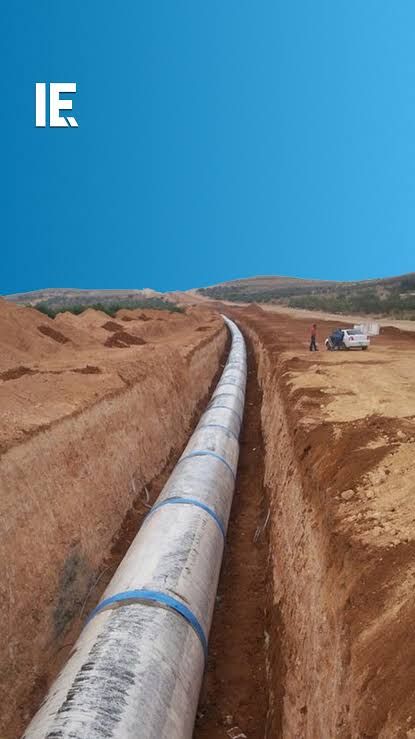
This 8-meter-diameter underground pipeline stretches over 2,820 km, making it the longest water supply network in the world. Built in Libya, this marvel transports water from deep underground aquifers in the Sahara Desert to the coastal cities where most of Libya’s population lives.

How Was It Built?

The project started in 1984 under Muammar Gaddafi’s regime and took decades to construct.

It consists of a network of pipes, reservoirs, and pumping stations transporting over 6.5 million cubic meters of water daily—enough to fill 2,600 Olympic-sized swimming pools.

The water is drawn from fossil aquifers, which are over 10,000 years old and buried beneath the desert.

Why Don’t People Talk About It?

It’s in Libya, a country that has faced political instability, so it doesn’t get much media attention.

Many Western engineers dismissed the project as impossible before it was completed.

In 2011, during NATO’s intervention in Libya, the system was bombed, damaging key infrastructure.

The Ironic Twist

The GMR was often called “the Eighth Wonder of the World,” yet it remains one of the least-known engineering feats. It’s a reminder that greatness doesn’t always get the recognition it deserves—something engineers, like myself, know all too well.

The Bridge That Fixed Itself: A Lesson in Unintended Genius

The Problem That Stumped Engineers

In 1940, the Tacoma Narrows Bridge in Washington was hailed as a marvel of engineering. Slender, elegant, and stretching over the Puget Sound, it was the pride of modern suspension bridge design. But soon after opening, something strange happened—it began to wobble.

Drivers reported that the bridge moved up and down like a giant wave. Engineers tried to find solutions, but before they could act, disaster struck. On November 7, 1940, the bridge collapsed spectacularly in what is now one of the most famous failures in civil engineering history.

The Unexpected Discovery

At the time, engineers believed that the wind simply “shook” the bridge too much. But this failure led to a major discovery: aerodynamic flutter. Unlike normal vibrations, this was a self-feeding force—wind didn’t just push the bridge, it made the entire structure resonate uncontrollably.

It was a lesson learned the hard way, but this event changed bridge engineering forever. Today’s suspension bridges, like the Golden Gate and Akashi Kaikyō, are designed with wind resistance in mind, using dampers, open trusses, and other stabilizing features.

The Wisdom in Failure

Ironically, the Tacoma Narrows Bridge did fix itself—by collapsing. If it hadn’t failed, engineers might have ignored aerodynamic flutter until an even bigger catastrophe occurred.

The lesson? Sometimes, our failures teach us more than our successes ever could. The things that go wrong in life may feel disastrous, but they often set the stage for greater wisdom, stronger foundations, and better designs—whether in engineering or in life.

The Poisoned Gift: How Cyanobacteria Nearly Wiped Itself Out

Once, over 2.5 billion years ago, Earth’s oceans were teeming with microscopic life. Among them were cyanobacteria, tiny organisms that discovered a way to harness the sun’s energy—photosynthesis. With each breath of sunlight, they exhaled something new into the world: oxygen.

At first, this oxygen was harmless. It dissolved into the oceans, reacting with iron to paint the seabed in bands of rust—the very iron formations we mine today. But cyanobacteria were relentless, churning out more and more oxygen until, one day, the ocean could hold no more. Oxygen spilled into the atmosphere, changing the planet forever.

What should have been their greatest achievement became their undoing. Most life at the time couldn’t survive in oxygen, a gas that was, ironically, a lethal poison to them. As the air turned toxic, entire species perished, including many of the cyanobacteria themselves. Their own success had nearly wiped them out.

And yet, some survived. A few had adapted, learning to tolerate oxygen, even to thrive in it. These resilient microbes would go on to shape the world as we know it, paving the way for complex life, animals, and eventually humans.

Sometimes, what we create—our own success, our own actions—can turn against us. But history teaches us this: adaptation is survival. The ones who endure are not always the strongest, but the ones who learn, evolve, and turn their challenges into stepping stones for the future.

So when life changes in ways you never expected, remember the cyanobacteria: what nearly destroyed them became the very thing that built a world.

2024

I LOST EVERYTHING THIS YEAR

I GAINED EVERYTHING THAT YEAR

Sometimes things go amiss, maybe for a reason

Saw it all when I got lost in this abyss, and I didn’t even commit treason

Maybe, I even contemplated Death giving me a kiss, And send me on a mission

But somewhat somehow I arose from the pits, Soldering on Marching on into this new season.

2025

INTERESTING ROADWAY ENGINEERING DESIGN STRATEGIES TO LOWER THE IMPACT OF ROAD ACCIDENTS

1. Runaway truck ramp/ emergency escape ramp
This is traffic device found on highways that traverse steep downgrades that enables vehicles which are having braking problems to safely stop. It is typically a long, sand- or gravel-filled lane connected to a steep downhill grade section of a main road, and is designed to accommodate big rigs such as large trucks or buses. The ramp allows a moving vehicle’s kinetic energy to be dissipated gradually in a controlled and relatively harmless way, helping the operator to stop it safely without a violent crash.
Research has shown that this technique is more effective in stopping vehicles when rounded gravel from riverbeds is used, rather than crushed gravel

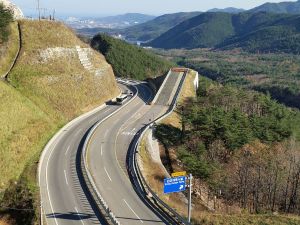
Emergency escape ramps are usually located on steep, sustained grades, as in mountainous areas. Long descending grades can allow high vehicle speeds to be reached, and truck brakes can overheat and fail through extensive use. The ramps are often built before a critical change in the radius of curvature of the road, or before a place that may require the vehicle to stop, such as before an intersection in a populated area. The placement criteria can vary from one region/country to another.

Roads are designed with broad shoulders and open zones to give vehicles a safe place to travel if they stray from the pavement.

putting in rumble strips and other pavement markers to warn vehicles when they cross over into another lane.

Using physical obstacles such as guardrails, median barriers, and others to divide opposing lines of traffic and lessen the possibility of head-on collisions.

installing traffic signals, roundabouts, and other traffic control equipment to assist in regulating traffic flow and lowering the probability of collisions.

Installing reflectors, reflecting pavement markings, and other visual aids will help make crossroads and other low-vision situations more visible.

roadways should be designed with gradual curves and ample sight distances to provide vehicles enough time to react to risks.

ensuring that the pavement is smooth, the lanes are clearly defined, and the roadway is in good shape.

putting in place traffic calming measures to slow down vehicles and lessen the severity of accidents, including speed bumps and traffic circles.

establishing secure crossings for bicycles and pedestrians, such as bike lanes and marked crosswalks.

implementing ITS (intelligent transportation systems) technologies to increase road safety, such as networked and driverless vehicles.

The Journey Begins

Thanks for joining me!

Good company in a journey makes the way seem shorter. — Izaak Walton

post

Life is a journey meant to be traversed with the finish line being self actualization and finally death. My late grandad always told me to live a life in such a way that when you retire back to your cocoon, you can be able to look back and appreciate what you have done so as to rest easy and contented when the time comes to leave the world. We all lead a different path and destiny has a unique promenade for each and everyone of us; but what’s of pre-eminence is making sure you metamorphose your destiny to meet your desires and goals.

Over time I have realized that the easiest way to achieve this is to run your race with the best who’ll serve as pacesetters to enable you get to the pinnacle of your accomplishments. I have always looked at the 2012 Olympic games held in London and believe that they were some of the most competitive and enthralling games to ever take place in history. Many milestones were achieved: During the Games, Michael Phelps became the most decorated Olympic athlete of all time, winning his 22nd medal. Usain Bolt’s performance in the 100m, 200m and 4 X 4 relay. Saudi Arabia, Qatar, and Brunei entered female athletes for the first time, so that every currently eligible country has now sent a female competitor to at least one Olympic Games. Women’s boxing was included for the first time, thus the Games became the first at which every sport had female competitors.

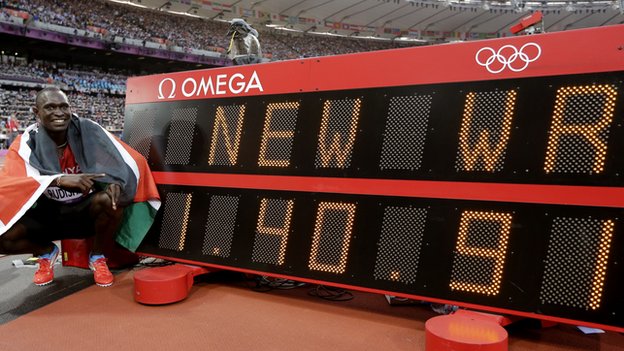
But the most notable race was the 8oom track event which had David Rudisha from Kenya winning and setting a new world record. Till date Rudisha still holds the world record of 1:40.91 for the 800 m, set at the London 2012 Olympics on 9 August 2012. He has the three fastest times recorded and six of the top eight fastest times in the 800m in history.

On 9 August at the 2012 Summer Olympics in London, Rudisha led from start to finish to win gold in what was acclaimed “The Greatest 800 Meter Race Ever“. In so doing, he became the first and, so far, only runner to break the 1:41 barrier for 800 m. From the start of the race, Rudisha led and pulled away from the rest of the field after 200 metres, completing the first lap in 49.28 seconds. By 600 metres his lead had grown to several metres. He continued to pull away until the final straight, where second place Nigel Amos was able to slightly gain some ground as Rudisha strained. But the gap was much too great to close, and Rudisha crossed the line in a world-record time of 1:40.91.

Rudisha’s competitors all ran exceptional times: WR, NR, PB, PB, PB, NR, SB, PB. (That is to say that the participants broke World Record, National Record, Personal Best, Personal Best, National Record, Season Best, Personal Best) The silver medalist, Amos, had to be carried from the track on a stretcher after setting the world junior record and make him only the fifth man in history to run under 1:42, something Rudisha has now done seven times. With Rudisha breaking 1:41, two men under 1:42, five under 1:43 and all eight under 1:44, Every competitor ran the fastest time in history for their placing. It was the first time in international 800m history where every competitor ran either a personal or season’s best. The time set by the eighth-placed Andrew Osagie, a personal best of 1:43.77, would have won gold at the three preceding Olympic games in Beijing, Athens and Sydney.

Rudisha’s record was considered special especially notable for the absence of pacemakers, which are not permitted at the Olympics or other major championships.

From this phenomenal race its quite easy to see that all participants achieved their very best just by simply being in the same race with the very best. So if we apply this same analogy in real life we would most definitely be at our very best if we associate and be in the same race with the unrivalled. The saying that if we shoot for the stars and miss you’ll land on the moon is also applicable. We were brought into this life and thrown into the whole mess without being apprised, requisitioned for consent or any form of notification. So its our duty to curve out a path that will be the best of us. Join me in this journey and lets see the various obstacles that Engineers have helped us evade in our daily lives through various designs that many a people rarely notice or appreciate but serve a whole lot in making life easier. Welcome and don’t forget that Good company in a journey makes the way seem shorter!!